
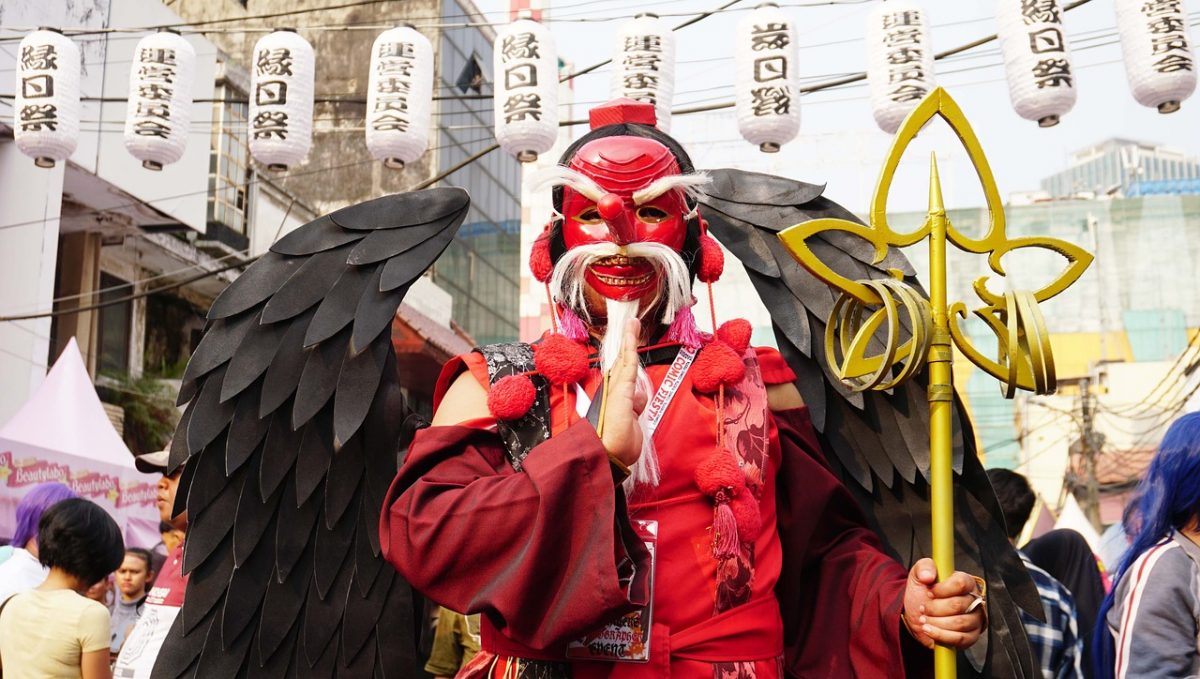
Summer is one of the best times to experience matsuri, Japan’s traditional festivals. Across the country, cities and towns fill with lanterns, processions, music, dancing, fireworks, food stalls, and people dressed in yukata.
Some matsuri are linked to Shinto shrines, local deities, and portable shrines called omikoshi. Others are rooted in Buddhist Obon customs, Tanabata star legends, fireworks traditions, or regional history.
Festival styles vary widely by region. Kyoto is known for elegant yamahoko floats during Gion Matsuri, Aomori for illuminated nebuta floats, Osaka for river processions, and Tokushima for mass street dancing.
Food is also part of the experience. During many summer festivals, yatai stalls sell classic snacks such as yakisoba, takoyaki, kakigori shaved ice, grilled corn, karaage, and festival sweets.
Most major summer matsuri are free to watch from public areas, but crowds can be intense, hotels sell out early, and some events offer paid seating or reserved viewing areas.
This guide highlights 10 of the best matsuri and summer festivals in Japan for 2026, with practical notes on when they take place, where to go, and how to plan for transport and crowds.
Table of Contents
- 1 Mitama Matsuri, Tokyo
- 2 Gion Matsuri, Kyoto
- 3 Tenjin Matsuri, Osaka
- 4 Sumidagawa Fireworks Festival, Tokyo
- 5 Aomori Nebuta Matsuri, Aomori
- 6 Awa Odori Matsuri, Tokushima
- 7 Awa Odori Matsuri, Tokushima
- 8 Akita Kanto Matsuri, Akita
- 9 Kanamara Matsuri, Kawasaki (Bonus)
- 10 Sendai Tanabata Matsuri, Sendai
- 11 Soma Nomaoi Festival, Fukushima (Bonus)
- 12 Yamagata Hanagasa Matsuri, Yamagata
- 13 Fukagawa Hachiman Matsuri, Tokyo
Mitama Matsuri, Tokyo
Mitama Matsuri is one of Tokyo’s most atmospheric summer festivals. It is held at Yasukuni Shrine in Chiyoda, where thousands of lanterns illuminate the approach to the shrine after dark.
The festival began in 1947 and is held during the Obon season to honor the spirits enshrined at Yasukuni. Today, it is known for its lantern displays, evening performances, traditional dances, and visitors wearing yukata.
Around 30,000 lanterns are displayed during the festival, creating one of Tokyo’s most striking summer night scenes. It is especially photogenic after sunset, when the lantern-lined approach fills with warm light.
Mitama Matsuri is a good choice if you are staying in Tokyo and want a festival that is easy to reach without leaving the city. It is also one of the earliest major summer matsuri, making it useful for travelers visiting Japan in mid-July.
When: July 13 to 16, 2026.
Where: Yasukuni Shrine, Tokyo, near Kudanshita Station.
How to get there: Take the Tokyo Metro or Toei Subway to Kudanshita Station. The shrine is a short walk from the station. JR Pass holders can use JR services to nearby central Tokyo stations, but the final subway ride is not covered by the pass.
Gion Matsuri, Kyoto
Gion Matsuri is Kyoto’s most famous summer festival and one of Japan’s best-known matsuri. It is associated with Yasaka Shrine and traces its origins to 869, when rituals were held to seek relief from an epidemic.
The festival runs throughout July, but the main events for most visitors are the yamahoko float processions and the Yoiyama evenings.
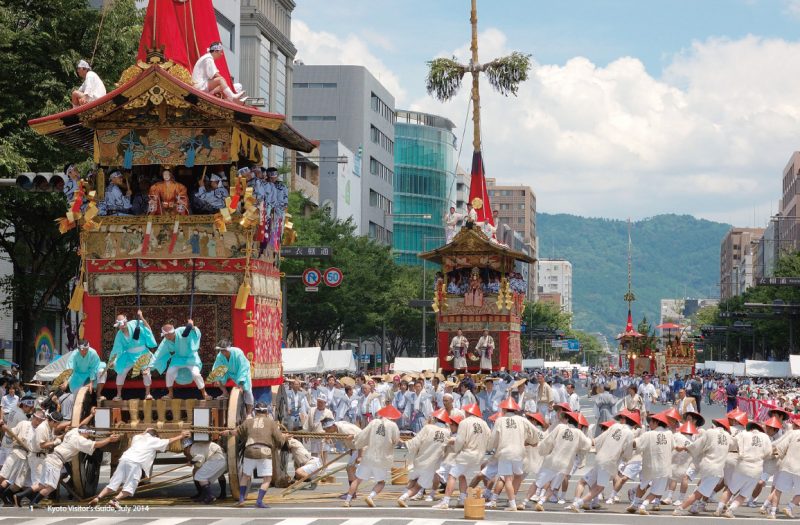
The yamahoko floats are the heart of Gion Matsuri. Some are huge wooden structures decorated with textiles, carvings, metalwork, and ornaments, which is why they are often described as moving museums.
In 2026, the main Yamaboko Junko processions are scheduled for July 17 and July 24. The Saki Matsuri procession on July 17 features 23 floats, while the Ato Matsuri procession on July 24 features 10 floats.
The most atmospheric evenings are Yoiyama, when central Kyoto’s streets fill with illuminated floats, lanterns, festival music, food stalls, and crowds in yukata. The busiest Yoiyama nights are usually July 14 to 16 and July 21 to 23.
The Kyoto Gion Festival float ceremony was inscribed on UNESCO’s Intangible Cultural Heritage list in 2009, recognizing the cultural value of the yamahoko tradition.
Gion Matsuri is a strong choice if you want to see Kyoto at its most festive, but it requires planning. Accommodation sells out early, streets become extremely crowded, and July in Kyoto is hot and humid.
When: July 1 to 31, 2026. Main float processions: July 17 and July 24.
Where: Central Kyoto, especially around Shijo, Karasuma, Kawaramachi, Oike, and the Yasaka Shrine area.
How to get there: From Kyoto Station, use the subway or local buses to reach central Kyoto. Karasuma, Shijo, Kyoto-kawaramachi, and Gion-shijo stations are useful access points depending on the event. JR Pass holders can use the pass to reach Kyoto Station, but most local subway, bus, and private railway travel within central Kyoto is separate.
Tenjin Matsuri, Osaka
Tenjin Matsuri is Osaka’s biggest summer festival and one of Japan’s three great festivals, alongside Kyoto’s Gion Matsuri and Tokyo’s Kanda Matsuri.
Held by Osaka Tenmangu Shrine, the festival is dedicated to Tenjin, the deified Sugawara no Michizane, who is associated with learning, scholarship, and the performing arts.
The festival has a history of more than 1,000 years and is held every year on July 24 and 25. July 24 is the Yoimiya, or pre-festival day, while July 25 is the Hommiya, or main festival day.
The main day features the Rikutogyo land procession, in which around 3,000 participants in traditional dress parade through the city with portable shrines, music, and ceremonial displays.
In the evening, the festival moves to the Okawa River for the Funatogyo boat procession. More than 100 lantern-lit boats travel along the river, creating one of Osaka’s most memorable summer scenes.
The night usually ends with a large fireworks display over the river, making Tenjin Matsuri a strong choice if you want processions, water, lights, and Osaka street energy in one event.
When: July 24 and 25, 2026. The main procession, boat parade, and fireworks are on July 25.
Where: Osaka Tenmangu Shrine and the Okawa River area, Osaka.
How to get there: Osaka Tenmangu Shrine is close to Osakatemmangu Station on the JR Tozai Line and Minami-morimachi Station on the Osaka Metro. JR Pass holders can use JR trains to reach Osaka and Osakatemmangu Station, but travel on the Osaka Metro is not covered.
Sumidagawa Fireworks Festival, Tokyo
The Sumidagawa Fireworks Festival, or Sumidagawa Hanabi Taikai, is one of Tokyo’s biggest summer events and one of Japan’s most famous fireworks displays.
Its origins date back to 1733, when fireworks were launched during the Ryogoku River Opening ceremony to pray for the souls of those who had died of famine and disease the previous year.
Today, the festival lights up the Sumida River area near Asakusa and Tokyo Skytree, with large displays launched from two sites along the river.
Although it is not a shrine matsuri like Gion Matsuri or Tenjin Matsuri, it belongs in any summer festival guide because hanabi, or fireworks, are a major part of summer culture in Japan.
The event attracts huge crowds, often close to one million people, so planning matters. Sumida Park and the Asakusa area are popular viewing spots, but they become extremely crowded well before the fireworks begin.
If you want a more comfortable experience, arrive early, avoid bringing large luggage, check station exit controls, and consider paid or reserved viewing options if available.
When: Saturday, July 25, 2026.
Where: Along the Sumida River in Tokyo, near Asakusa, Sumida Park, Kuramae, Ryogoku, and Tokyo Skytree.
How to get there: Asakusa Station is the most famous access point, but it is also one of the busiest. Kuramae, Honjo-azumabashi, Tokyo Skytree, Tawaramachi, and Ryogoku may also be useful depending on your viewing area. JR Pass holders can use JR lines to reach nearby hubs such as Ueno, Akihabara, or Ryogoku, but rides on the Tokyo Metro, Toei Subway, and Tobu Railway are not covered by the pass.

Aomori Nebuta Matsuri, Aomori
Aomori Nebuta Matsuri is one of the Three Great Festivals of Tohoku and one of Japan’s most visually powerful summer events.
The festival is famous for huge illuminated nebuta floats, often depicting warriors, kabuki characters, legendary figures, and scenes from Japanese and Chinese stories. These glowing paper-and-wire structures are pulled through central Aomori at night, surrounded by music, drums, flutes, and haneto dancers.
The energy of the festival is part of the appeal. Haneto dancers jump and chant “Rassera, rassera” as the floats move through the streets, creating a louder and more participatory atmosphere than many formal procession-style matsuri.
Aomori Nebuta has been designated an Important Intangible Folk Cultural Property of Japan. Its origins are often linked to Tanabata customs and local lantern traditions, although the exact history is still debated.
In 2026, the festival runs from August 2 to 7. Evening parades take place on the main nights, while the final day includes a daytime parade and an evening finale with selected nebuta displayed on boats in Aomori Bay alongside fireworks.
Aomori Nebuta is worth planning around if you want a summer festival with scale, sound, movement, and dramatic night photography. Hotels in Aomori sell out quickly, so book early or consider staying elsewhere in northern Tohoku and traveling by train.
When: August 2 to 7, 2026.
Where: Central Aomori City, near Aomori Station.
How to get there: From Tokyo, take the Tohoku Shinkansen to Shin-Aomori Station, then transfer to a local train to Aomori Station. The main parade route is within walking distance of Aomori Station. The Japan Rail Pass covers the Tohoku Shinkansen, including Hayabusa services, but seat reservations are required on Hayabusa trains.
Awa Odori Matsuri, Tokushima
Awa Odori is Tokushima’s signature summer festival and one of Japan’s most famous traditional dance events.
The festival is connected to Obon, the summer period when families welcome the spirits of their ancestors. Over time, Tokushima’s Awa Odori developed into a huge citywide celebration of music, movement, and street performance.
Awa Odori has more than 400 years of history. Its name comes from Awa, the former name for Tokushima Prefecture, and odori, meaning “dance”.
During the festival, dance groups known as ren perform through the streets to the sound of shamisen, taiko drums, flutes, and kane bells. The dancing is energetic, rhythmic, and easy to recognize, with men and women often using different steps and movements.
The famous festival chant is often translated as: “The dancers are fools, the watchers are fools; both are fools, so why not dance?” That spirit is part of what makes Awa Odori so welcoming for visitors.
Some performances take place in paid seating areas, while others can be watched from the streets. Visitors may also be able to join informal dance groups, known as niwaka-ren, depending on the year’s program.
Awa Odori is a strong choice if you want a festival that feels lively, participatory, and less formal than a float procession. Book accommodation early, as Tokushima becomes extremely busy during the festival period.
When: August 12 to 15, 2026.
Where: Central Tokushima City, especially around Tokushima Station and the main dance venues.
How to get there: From Okayama, take JR trains toward Tokushima via Takamatsu or other Shikoku connections, depending on the timetable. JR Pass coverage applies to JR sections, but some routes may be slower than expected, so check connections in advance. Tokushima Awaodori Airport also has domestic flights from major Japanese cities.
Awa Odori Matsuri, Tokushima
Awa Odori is Tokushima’s signature summer festival and one of Japan’s most famous traditional dance events.
The festival is connected to Obon, the summer period when families welcome the spirits of their ancestors. Over time, Tokushima’s Awa Odori developed into a huge citywide celebration of music, movement, and street performance.
Awa Odori has more than 400 years of history. Its name comes from Awa, the former name for Tokushima Prefecture, and odori, meaning “dance”.
During the festival, dance groups known as ren perform through the streets to the sound of shamisen, taiko drums, flutes, and kane bells. The dancing is energetic, rhythmic, and easy to recognize, with men and women often using different steps and movements.
The famous festival chant is often translated as: “The dancers are fools, the watchers are fools; both are fools, so why not dance?” That spirit is part of what makes Awa Odori so welcoming for visitors.
Some performances take place in paid seating areas, while others can be watched from the streets. Visitors may also be able to join informal dance groups, known as niwaka-ren, depending on the year’s program.
Awa Odori is a strong choice if you want a festival that feels lively, participatory, and less formal than a float procession. Book accommodation early, as Tokushima becomes extremely busy during the festival period.
When: August 12 to 15, 2026.
Where: Central Tokushima City, especially around Tokushima Station and the main dance venues.
How to get there: From Okayama, take JR trains toward Tokushima via Takamatsu or other Shikoku connections, depending on the timetable. JR Pass coverage applies to JR sections, but some routes may be slower than expected, so check connections in advance. Tokushima Awaodori Airport also has domestic flights from major Japanese cities.
Akita Kanto Matsuri, Akita
Akita Kanto Matsuri is one of the Three Great Festivals of Tohoku, alongside Aomori Nebuta Matsuri and Sendai Tanabata Matsuri.
The festival is famous for kanto poles: long bamboo poles fitted with rows of paper lanterns, balanced by performers on their hands, foreheads, shoulders, or hips.
Each kanto pole is shaped to resemble an ear of rice, while the lanterns represent sacks of rice. The festival is connected to prayers for good harvests and protection from illness during the hottest part of summer.
At night, central Akita fills with glowing lantern poles, drums, flutes, and chants. The skill involved is part of the spectacle, as performers balance heavy kanto poles while the lanterns sway above the street.
Akita Kanto Matsuri is a strong choice if you want a summer festival that is visually dramatic but different from float parades, fireworks, or dance events.
When: August 3 to 6, 2026.
Where: Kanto Odori, central Akita City, near Akita Station.
How to get there: From Tokyo, take the Akita Shinkansen to Akita Station. The Japan Rail Pass covers the Akita Shinkansen, but seat reservations are required.
Kanamara Matsuri, Kawasaki (Bonus)

Kanamara Matsuri is one of Japan’s best-known fertility festivals, held at Kanayama Shrine in Kawasaki, just south of Tokyo.
It is famous for its phallic imagery, including decorations, sweets, souvenirs, and mikoshi portable shrines carried through the streets. Behind the unusual visuals, the festival is rooted in prayers for fertility, safe childbirth, marital harmony, and protection from sexually transmitted infections.
In recent decades, Kanamara Matsuri has also become associated with sexual health awareness and fundraising for HIV-related causes.
This festival is not a summer matsuri. It is held in spring, on the first Sunday of April; however, due to its popularity, it is worth mentioning.
When: April.
Where: Kanayama Shrine, Kawasaki, Kanagawa Prefecture, near Kawasaki-Daishi Station.
How to get there: From central Tokyo, take JR lines to Kawasaki Station, then transfer to the Keikyu network toward Kawasaki-Daishi. JR Pass holders can use JR services to Kawasaki, but the Keikyu section is not covered.
Sendai Tanabata Matsuri, Sendai
Sendai Tanabata Matsuri is Japan’s largest Tanabata celebration and one of the Three Great Festivals of Tohoku, alongside Aomori Nebuta Matsuri and Akita Kanto Matsuri.

Tanabata is based on the star festival legend of two lovers, Orihime and Hikoboshi, who are represented by the stars Vega and Altair, and who are allowed to meet once a year.
While many Tanabata festivals in Japan are held in July, Sendai Tanabata takes place every year from August 6 to 8. The timing is set one month after many July celebrations, helping preserve the seasonal feel of the old festival.
The main draw is the decoration. Central Sendai’s shopping arcades and streets are filled with large handmade streamers, paper ornaments, and bamboo displays created by local shops, schools, companies, and community groups.
Many decorations are several meters long and hang overhead like colorful curtains, turning the city center into one of Japan’s most photogenic summer festival scenes.
The festival usually begins with a fireworks display on August 5, the evening before the main decorations are unveiled. From August 6 to 8, visitors can walk through the decorated arcades, enjoy food stalls, see performances, and explore the city atmosphere from morning to night.
Sendai Tanabata is a strong choice if you want a festival that is beautiful, easy to walk through, and less dependent on securing a specific parade viewing spot. It is still extremely popular, with more than two million visitors in a typical year, so accommodation should be booked early.
When: August 6 to 8, 2026. Festival-eve fireworks are usually held on August 5.
Where: Central Sendai, especially the shopping arcades around Sendai Station, Chuo-dori, and Ichibancho.
How to get there: From Tokyo, take the Tohoku Shinkansen to Sendai Station. The Japan Rail Pass covers Tohoku Shinkansen services, including Hayabusa trains, but seat reservations are required for Hayabusa trains.
Soma Nomaoi Festival, Fukushima (Bonus)

Soma Nomaoi is one of Japan’s most dramatic samurai heritage festivals, held in the Soma region of Fukushima Prefecture.
The festival is said to have more than 1,000 years of history and is linked to the traditions of the Soma clan. It is designated as an Important Intangible Folk Cultural Property of Japan.
Around 400 mounted warriors take part in the festival, wearing armor, carrying swords, and displaying ancestral banners as they recreate the atmosphere of a samurai military procession.
The main visitor highlights are the Ogyoretsu procession, the Kacchu Keiba armored horse race, and the Shinki Soudatsusen, where riders compete for sacred flags launched into the sky.
The main ticketed events are usually held on the second day at Hibarigahara Festival Field in Minamisoma. Other ceremonies and events take place across the Soma region, including shrines in Soma and Minamisoma.
Important: Although Soma Nomaoi used to be a late-July festival, it is now celebrated in late May.
When: Late May. Check the official annual schedule before traveling.
Where: Soma and Minamisoma, Fukushima Prefecture. The main visitor events are held at the Hibarigahara Festival Field in Minamisoma.
How to get there: From Tokyo, take the JR Joban Line Limited Express Hitachi to Haranomachi Station, which takes around 3.5 hours. Another option is the Tohoku Shinkansen to Fukushima Station, then a bus to Haranomachi. JR Pass coverage depends on the route and service used, so check your exact itinerary before traveling.
Yamagata Hanagasa Matsuri, Yamagata
Yamagata Hanagasa Matsuri is one of Tohoku’s major summer festivals.
The festival is known for large dance parades where performers carry hanagasa, straw hats decorated with safflowers, the flower associated with Yamagata Prefecture.
Dancers move through central Yamagata to the rhythm of taiko drums and the festival chant “Yassho, makasho.” The atmosphere is lively, colorful, and easy for visitors to enjoy, even if they do not know the choreography.
Unlike float-based festivals such as Aomori Nebuta or Gion Matsuri, Yamagata Hanagasa Matsuri is all about coordinated movement, music, and the visual effect of thousands of dancers carrying flower-covered hats.
It is a good choice if you want a summer festival that feels energetic, accessible, and distinctly local, with a strong Tohoku identity.
When: August 5 to 7, 2026.
Where: Central Yamagata City, near Yamagata Station.
How to get there: From Tokyo, take the Yamagata Shinkansen to Yamagata Station. The Japan Rail Pass covers the Yamagata Shinkansen, but seat reservations are recommended during festival periods.
Fukagawa Hachiman Matsuri, Tokyo
Fukagawa Hachiman Matsuri is the annual festival of Tomioka Hachimangu Shrine in Koto City, Tokyo. It is one of the Three Great Festivals of Edo, alongside Kanda Matsuri and Sanno Matsuri.
The festival is best known as a mizukake matsuri, or water-splashing festival. As mikoshi portable shrines are carried through the streets, spectators splash water over the bearers as a form of purification and to help cool them in the August heat.
The biggest version of the festival is the Hon-matsuri, held once every three years. In Hon-matsuri years, around 50 large mikoshi take part in the main procession, creating one of Tokyo’s most energetic traditional festival scenes.
The next Hon-matsuri takes place in 2026, making Fukagawa Hachiman Matsuri especially worth including in a summer festival itinerary.
The festival is lively, crowded, and very wet near the procession route. Wear clothes and shoes that can handle splashing, protect cameras and phones, and avoid bringing large luggage.
When: Mid-August 2026. Current event listings list the festival as either August 12 to 16 or August 13 to 17, so check the final shrine or Koto City program before traveling.
Where: Tomioka Hachimangu Shrine and the Fukagawa area of Koto City, Tokyo.
How to get there: Tomioka Hachimangu Shrine is a short walk from Monzen-nakacho Station on the Tokyo Metro Tozai Line and Toei Oedo Line. JR Pass holders can use JR lines to reach nearby hubs such as Tokyo, Ueno, or Etchujima, but rides on the Tokyo Metro and Toei Subway are not covered.