
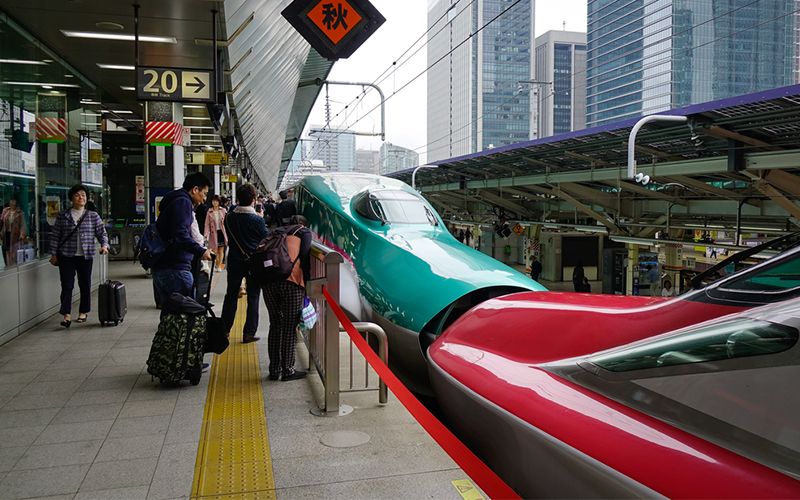
Traveling around Japan using Shinkansen bullet trains is an absolute pleasure. They’re comfortable, convenient, luxurious, and above all, super-fast! However, at first, it can be difficult to know where and how to buy Shinkansen tickets.
Everyone wants to get the best value tickets possible, but without doing extensive research, it can be tricky. This guide to Shinkansen tickets will explain the different types, where to buy them from, how to use them, and how you can save money by getting the best-value tickets.
Table of Contents
Shinkansen tickets types
To ride a Shinkansen, you need 2 types of tickets:
- Basic fare ticket for travel between stations
- Limited Express ticket, which covers the surcharge for the service
Depending on how you buy your ticket, these may be issued as one combined ticket or as two or more separate tickets. If you reserve a seat, the reserved seat details are usually provided on your limited express ticket.
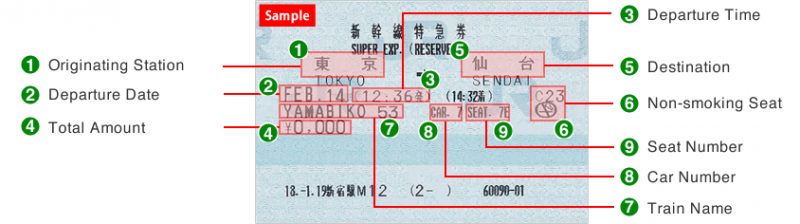
Certain ticket products or booking methods use a single integrated ticket, but with separate paper tickets, you need both the basic fare ticket and the Limited Express ticket to board your train.
Read more: Japan train tickets guide
Shinkansen ticket prices
The price of a Shinkansen ticket consists of the basic fare and the Shinkansen limited express fare. The total depends on the distance, train service, seat type and travel date. An additional charge applies when travelling in a Green Car.
Reserved-seat fares vary by season. On many journeys, the regular-season fare is reduced by ¥200 during the off-peak season, increased by ¥200 during peak season and increased by ¥400 during the super-peak season. Larger adjustments may apply to journeys crossing more than one of the Tokaido, Sanyo and Kyushu Shinkansen lines.
Some trains, such as Nozomi and Mizuho services, incur an additional supplemental fee for JR Pass holders. Other eligible Shinkansen services are covered by the Japan Rail Pass.
Below, we’ve provided a breakdown of the prices of some of the most popular routes on the Tokaido Shinkansen on Kodama and Hikari services. Keep in mind that fares can vary depending on time of year and various other factors.
| Route |
Adult ticket price |
Child ticket price |
| Tokyo to Nagoya |
¥10,560 |
¥5,280 |
| Tokyo to Osaka |
¥13,870 |
¥6,930 |
| Tokyo to Kyoto |
¥13,320 |
¥6,660 |
| Tokyo to Hiroshima |
¥18,380 |
¥9,190 |
| Osaka to Kyoto |
¥1450 |
¥720 |
The prices indicated include the base fare + surcharge and are for non-reserved seating in an ordinary car. You can find more information on the breakdown of the fees here.
Child discount
Children (under 12 years old) are entitled to a discount depending on how young they are. The different discounts for a child depending on age are as follows:
- Children aged 6 to 11 pay half the adult basic fare, limited express fare and reserved-seat charge. Green Car charges are the same as for adults.
- Young children aged 1 to 5 usually travel free when accompanied by a fare-paying adult or child. Up to 2 young children may travel free with each accompanying passenger. A child fare applies from the third young child onwards or when a young child uses their own reserved seat.
- Infants under 1 year old usually travel free. A child fare is required if an infant uses their own reserved seat, Green Car seat or sleeping berth.
A 6-year-old who has not yet started primary school is treated as a young child. A 12-year-old who is still at primary school is treated as a child.
How and where to buy Shinkansen tickets
You can buy regular Shinkansen tickets either online or in person from ticket counters or ticket machines.
Buying Shinkansen tickets online
For Sanyo, Tokaido and Kyushu Shinkansen tickets, you can buy online through the official website, SmartEx.
For JR East Shinkansen routes and selected connecting JR Hokkaido services, you can use JR-EAST Train Reservation. This service also sells selected Limited Express tickets and rail passes.
Here’s a breakdown of some of the differences between these two platforms:
| Feature | Ekinet | SmartEX |
|---|---|---|
| Coverage | Covers JR East trains, including the Tohoku, Joetsu, and Hokuriku Shinkansen. Also includes some JR Hokkaido services. Limited Express, Joyful Trains, and Narita Express tickets available. | Covers the Tokaido, Sanyo, and Kyushu shinkansen operated by JR West, JR Kyushu, and JR Central. |
| Languages | Available in English, French, Spanish, German, Chinese, and Thai. | Available in Japanese and English. |
| Boarding Options | Paper tickets or supported ticketless services, depending on the product. | QR code or IC card link. Paper tickets also available. |
| Ticket Collection | At JR East/Hokkaido stations. | Only at JR Central/West/Kyushu stations, plus ticket vending machines at certain JR East stations. |
SmartEX also has an official mobile app in supported countries and regions. Travellers elsewhere can use the SmartEX website through a browser.
To take advantage of the multi-trip ticket, the Japan Rail Pass is available to order online in advance of your trip.
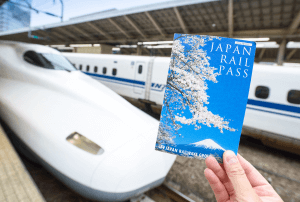
The JR Pass gives you unlimited access to transportation all around Japan for 7, 14, or 21 days, including Shinkansen.
A single ticket, huge savings.
Buying Shinkansen tickets in person
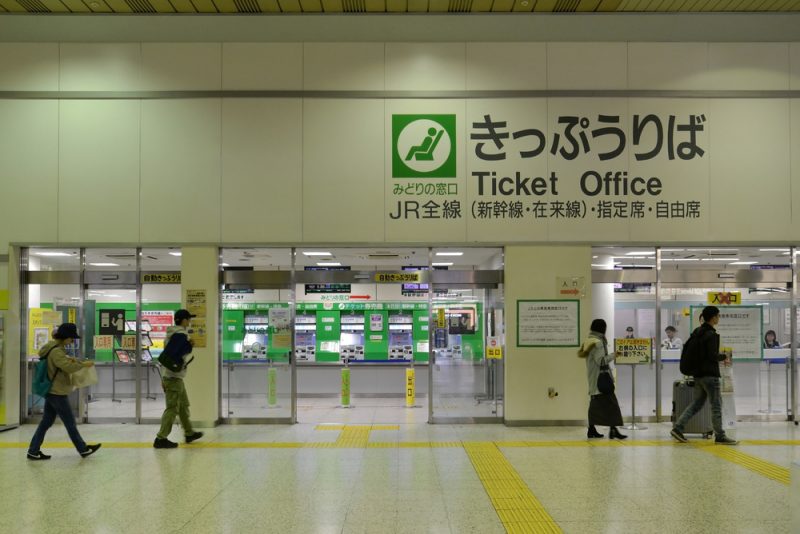
There are JR ticket offices at every major and most minor train stations throughout Japan. Credit cards are accepted at the vast majority of ticket offices. You need to provide the following information to buy a ticket:
- Number of passengers
- Journey date
- Departure station
- Destination station
- Regular or green car
- Reserved or non-reserved seat
For a seat reservation, you also need to provide the following additional information:
- Train name (e.g. Hikari)
- Train number
- Departure time
- Smoking or non-smoking
Also, in the JR offices you can always activate your JR Pass and make the related seat reservations.
You can use most ticket machines in English. The machines are very useful if you’re familiar with them, but they can be confusing. Not all machines are the same, as some only offer Shinkansen tickets, others only offer seat reservations, and some do not accept foreign credit cards.
How to use Shinkansen tickets
There are special Shinkansen gates at train stations for the bullet trains. How you enter depends on your ticket type. With paper tickets, insert your basic fare ticket and limited express ticket together. If you received one combined ticket, insert that ticket into the gate.
With supported online tickets, you can enter by scanning your QR ticket or touching your registered IC card at the Shinkansen gate, depending on the booking service.
Make sure you take your tickets back, you’ll need them for onboard inspection and to exit at your destination. You can then check the electronic timetables to find out which platform your Shinkansen train departs from.
If you have a non-reserved seat ticket, you can find where the non-reserved cars and wait in line.
If you have a reserved ticket, check the car and seat numbers shown in your reservation before boarding.
Read more: Train travel in Japan
Single tickets vs JR Pass
If you’re planning to spend more than a few days in Japan, visit several parts of the country, and travel long distances, it may be more affordable to buy a Japan Rail Pass than several one-way tickets.
Sometimes one-way tickets aren’t worth it, especially if you’re making several trips on Shinkansen, local trains, or JR Group buses.
The Japan Rail Pass is also a practical option for easy travel, as this single, unlimited ticket means you don’t have to buy a ticket every time you want to make a journey.
If you're looking to extensively explore a specific area of Japan, choose one of the JR Regional Passes for unlimited travel within a designated region.
An alternative to the JR Pass is the regional passes offered by JR companies in different regions of Japan: a regional pass can be a great option if you’re only planning to spend time in one specific area of the country.