
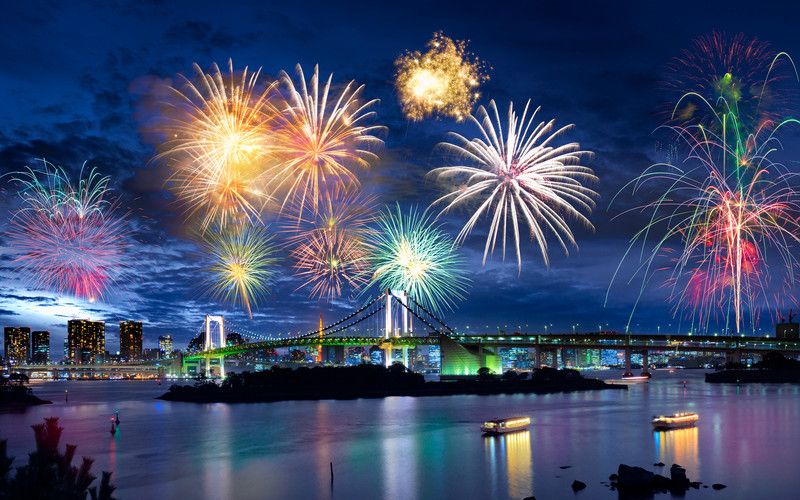
Japanese fireworks festivals, known as hanabi festivals, are a highlight of summer travel in Japan. Many of the country’s best-known displays take place in July and August, although some major fireworks competitions are held later in the year.
Hanabi festivals range from huge riverside displays in Tokyo and Osaka to historic competitions where Japan’s top pyrotechnicians present carefully designed fireworks. Shows can last around 2 hours, and many festival areas also offer traditional Japanese dishes and snacks.
If you’re visiting Japan in 2026, these are 8 of the best hanabi festivals to consider, including their expected dates, locations, and access information.
Table of Contents
- 1 Quick answer: Best hanabi festivals in Japan for 2026
- 2 Nagaoka Fireworks Festival
- 3 Omagari Fireworks Competition
- 4 Tsuchiura Fireworks Competition
- 5 Sumidagawa Fireworks Festival
- 6 Kumano Fireworks Festival
- 7 Kachimai Fireworks Festival
- 8 Naniwa Yodogawa Fireworks Festival
- 9 Miyajima Fireworks Festival
- 10 FAQs About Japan’s Fireworks Events
Quick answer: Best hanabi festivals in Japan for 2026
The best Japanese fireworks festivals to visit in 2026 include Nagaoka, Omagari, Tsuchiura, Sumidagawa, Kumano, Kachimai, Naniwa Yodogawa, and Miyajima. Most take place in summer, but Tsuchiura is an autumn fireworks competition.
Nagaoka Fireworks Festival
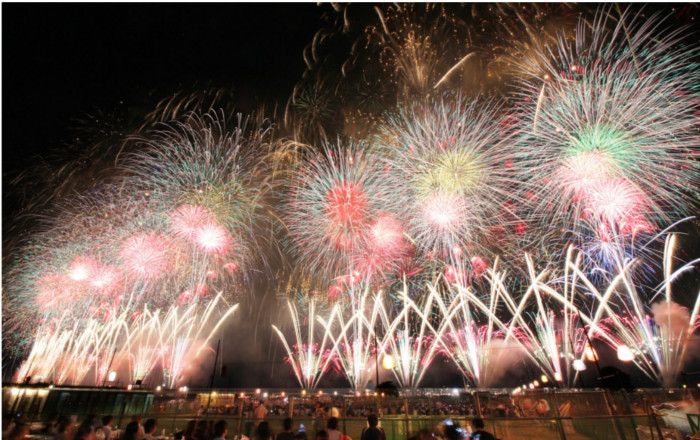
Nagaoka, in Niigata Prefecture, is home to one of the biggest fireworks festivals in Japan. The event is closely tied to remembrance after the 1945 Nagaoka Air Raid, and its Phoenix Fireworks have become a symbol of recovery and peace.
More than 20,000 fireworks are launched over 2 nights, including giant sanshakudama shells with bursts that can reach around 650 meters in diameter. One of the main highlights is the Phoenix Fireworks display, which stretches for around 2 kilometers along the Shinano River.
Dates: The Nagaoka Festival Grand Fireworks Display is held every year on August 2 and 3. In 2026, these dates fall on Sunday, August 2 and Monday, August 3.
Access: To get there, you can use your JR Pass and take the Joetsu Shinkansen to Nagaoka Station. From there, it is around a 30-minute walk to the riverside festival area.
Omagari Fireworks Competition
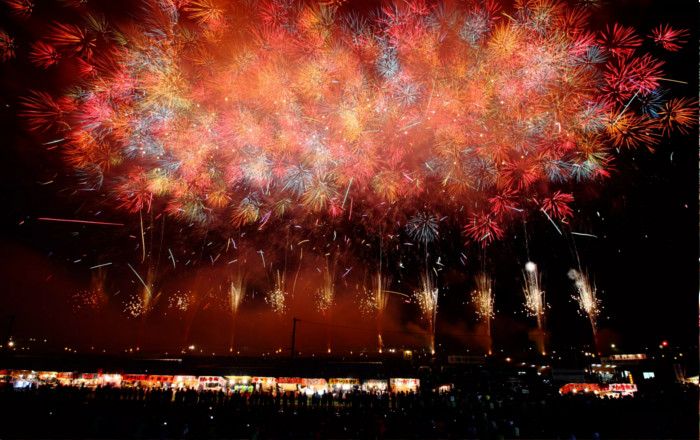
Pyrotechnicians from across Japan gather along the Omono River in Daisen City, Akita Prefecture, to show their craftsmanship and creativity. The competition started in 1910 and is one of Japan’s most prestigious fireworks events.
Large crowds travel to Daisen from across Japan to see the display. One of Omagari’s distinctive features is its daytime fireworks display, where coloured smoke is used to paint the sky before the evening competition.
Dates: The 98th National Fireworks Competition is scheduled for Saturday, August 29, 2026.
Access: You can take the Tohoku and Akita Shinkansen to Omagari Station, a route covered by your JR Pass.
Tsuchiura Fireworks Competition
Tsuchiura is one of Japan’s major competitive fireworks events, known for technically ambitious displays and creative designs. Unlike most large hanabi festivals, it is held in autumn rather than during the main summer fireworks season.
The competition started in 1925 as a memorial service for deceased naval officers and has evolved into a major national event. Fireworks are judged across 3 divisions: Starmines, Size 10 shells, and Original displays.
Many visitors arrive early and spend time near the Sakuragawa riverside area before the show.
Dates: The 95th Tsuchiura All Japan Fireworks Competition is scheduled for Saturday, November 7, 2026.
Access: To get there by train, you can take the Joban Line from Tokyo to Tsuchiura, covered by your JR Pass. From JR Tsuchiura Station, you can walk for around 30 minutes to the Sakuragawa riverside venue. Shuttle bus arrangements may vary by year.
Sumidagawa Fireworks Festival
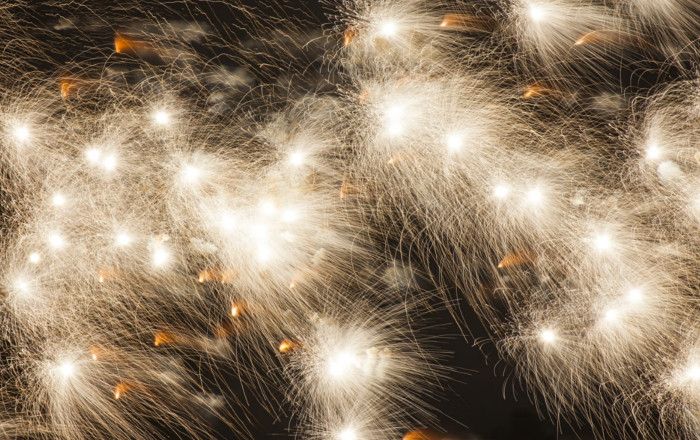
Held in Tokyo, this festival traces its roots to the 1733 Ryogoku River Opening ceremony, making it rich in history and tradition. The competition between fireworks makers is fierce, producing one of Tokyo’s best-known summer displays.
Huge crowds gather to see around 20,000 fireworks in a variety of colors and shapes. It can be difficult to get a good view, as the area around the Sumida River becomes extremely busy for the event. However, it’s definitely worth the effort.
Popular viewing areas include Sumida Park and Shioiri Park, while Asakusa Station is one of the main access points for the festival area.
Dates: The 49th Sumida River Fireworks Festival is scheduled for Saturday, July 25, 2026.
Access: To get there, you can travel to Asakusa Station in Tokyo and walk towards the Sumida River viewing areas.
Kumano Fireworks Festival
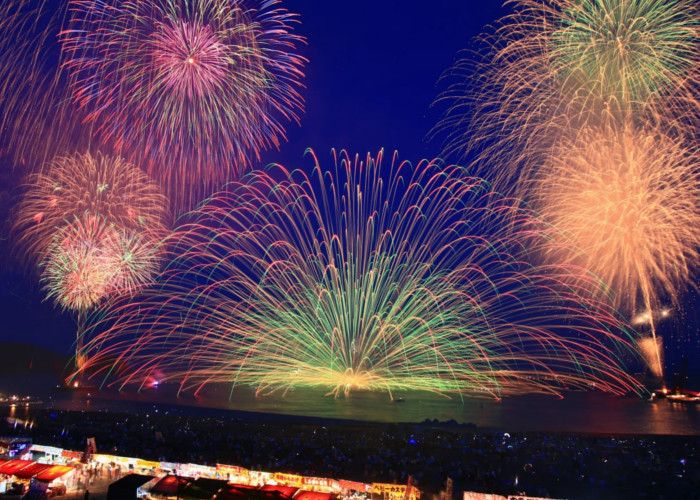
Set against the backdrop of the Kumano-nada Sea at Shichiri Mihama Beach, around 10,000 fireworks are launched over the water and from boats. This makes the Kumano Fireworks Festival one of Japan’s most distinctive seaside hanabi events.
It is Kumano’s signature annual event, with a history of more than 300 years as part of the local Obon season. In recent years, the display has become especially known for its Onigajo fireworks, where explosions echo against the cliffs to create dramatic visual and sound effects.
Visitors can enjoy the display from Shichiri Mihama Beach.
Dates: The 2026 Kumano Fireworks Festival is scheduled for Monday, August 17, from around 19:00. Reserve dates are August 21, 24, and 27.
Access: To get there from Tokyo, you can take the Tokaido Shinkansen to Nagoya and then the JR Nanki Limited Express to Kumanoshi Station, covered by the JR Pass. From Kumanoshi Station, walk towards Shichiri Mihama Beach.
Kachimai Fireworks Festival
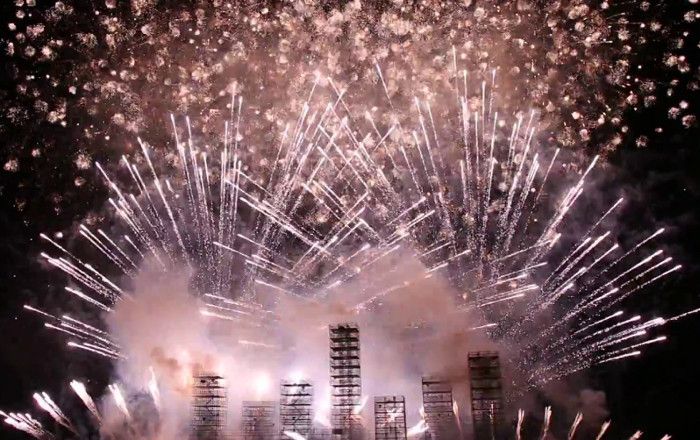
Kachimai was first held in 1929 as Hokkaido’s first-ever fireworks display. Today, it is one of Hokkaido’s largest fireworks events and a major summer highlight in Obihiro.
The show combines fireworks, music, lighting, and large-scale staging, with new surprises added in many editions. Its best-known feature is the Nishiki Kamuro firework, which sprays golden sparks across the night sky.
The festival is also a precursor to the Heigen Matsuri and is an important part of the Obon holiday period in Obihiro.
Dates: The 74th Kachimai Fireworks Festival is scheduled for Thursday, August 13, 2026, at the Tokachi River riverside special venue in Obihiro.
Access: The venue is around a 20-minute walk from Obihiro Station. By rail, you can travel through Sapporo or Minami-Chitose and take a Limited Express Ozora or Tokachi service to Obihiro. Flying to Obihiro Airport is also a practical option for many travelers.
Naniwa Yodogawa Fireworks Festival
Naniwa Yodogawa is one of the younger festivals on this list. Local volunteers launched it in 1989, and it is still presented as a handmade fireworks festival supported by the local community.
Osaka is known as the city of water because of its many rivers, and this event makes full use of the Yodo River setting. Crowds gather along the riverbanks near Juso and Umeda, so it’s important to arrive early if you plan to use general viewing areas.
The display is known for music-synchronized fireworks, water-based effects, and wide star mines over the river.
Dates: The 38th Naniwa Yodogawa Fireworks Festival is scheduled for Saturday, October 17, 2026.
Access: You can travel from Tokyo to Shin-Osaka on the Tokaido Shinkansen. From there, use local trains or the subway to reach Juso or nearby stations close to the Yodo River viewing areas.
Miyajima Fireworks Festival
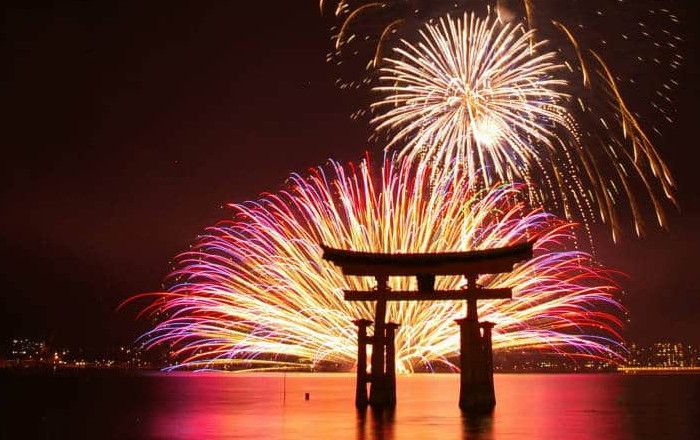
With fireworks launched over the water near Miyajima, this event became famous for its views of Itsukushima Shrine and the floating torii gate against the night sky. The reflections on the Seto Inland Sea helped make it one of Japan’s most atmospheric fireworks displays.
However, the old Miyajima Water Fireworks Festival no longer runs in its previous annual August format. After several cancellations and safety concerns, the event returned in a new format in 2025 as the Itsukushima Underwater Fireworks Festival.
For 2026, an official date has not yet been confirmed, so this is the event on the list that most clearly needs schedule verification before travelers plan around it.
Dates: The 2026 date has not been officially confirmed. The event returned in a new format in October 2025, so check the latest schedule before planning around it.
Access: To get there, you can take the Sanyo Shinkansen to Hiroshima, then a JR train to Miyajimaguchi Station. From there, take the ferry to Miyajima. JR ferry coverage may depend on your pass type and current JR Pass conditions.
FAQs About Japan’s Fireworks Events
When is fireworks season in Japan?
Japan’s main fireworks season is summer, especially July and August. However, some major events happen outside this period, including the Tsuchiura All Japan Fireworks Competition, which is held in autumn.
What are hanabi festivals?
Hanabi festivals are Japanese fireworks festivals. They often include large-scale displays, food stalls, riverside or seaside viewing areas, and, in some cases, competitions between professional pyrotechnicians.
What is the best fireworks festival in Japan in 2026?
There is no single best festival for every traveler. Nagaoka is ideal for a large emotional display. Omagari and Tsuchiura are best for competition-style fireworks. Sumidagawa is best for central Tokyo, and Kumano is one of the most distinctive seaside displays.
Are Japanese fireworks festivals free?
Many hanabi festivals have free viewing areas, but major events may also offer paid reserved seats. Travelers should check seating and crowd-control rules before planning around a specific festival.
Can I use the JR Pass to reach Japanese fireworks festivals?
Yes, the JR Pass can help with access to many of these festivals, especially destinations such as Nagaoka, Tsuchiura, Kumano, Obihiro, Osaka, and Hiroshima/Miyajima. Local transport, private railways, ferries, or reserved event transport may not always be fully covered.
Credit for images copyrighted by JNTO ©JNTO