
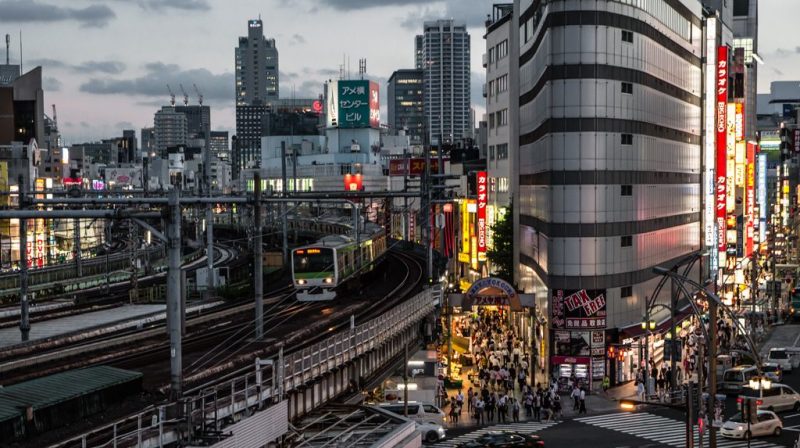
Located in the Taito ward of Tokyo, Ueno Station is a key transport hub for travelers visiting the capital. It’s used by local commuters and also for long distance trips from northern parts of Japan.
It was constructed in 1883 and its design inspired a pre-1912 poem by the young Ishikawa Takuboku. A memorial plate concerning the poem can be viewed inside the station.
Though it’s an important part of the transport network, Ueno Station is smaller than many others in Tokyo. The information on this page will help you navigate the station smoothly during your trip!
Table of Contents
Ueno Station train lines
Ueno Station can serve as your gateway to Tokyo and the rest of Japan using your JR Pass for affordable travel.
In the station’s JR office you can exchange your pass and make your seat reservations. The office is located at the Information Center (Central Ticket Gate) and is open every day from 9 a.m. to 7 p.m.
Shinkansen lines
Ueno is served by the following Shinkansen bullet train lines:
- Tohoku Shinkansen to Sendai, Morioka, Shin-Aomori, and Shin-Hakodate-Hokuto (these last two stations connect with the Hokkaido Shinkansen).
- Yamagata Shinkansen to Shinjo, Yamagata, and Fukushima.
- Akita Shinkansen to Morioka and Akita.
- Joetsu Shinkansen to Niigata and Takasaki.
- Hokuriku Shinkansen to Nagano, Toyama, Kanazawa and Tsuruga.
Follow the in-station signs for ‘Shinkansen’ and allow extra time for transfers from other services, especially if you are traveling with luggage.

Other JR lines
Other JR lines at Ueno Station include:
- Utsunomiya Line, also called the Tohoku Main Line, to Kuroiso, Omiya, Koga, Oyama, and Utsumoniya.
- Takasaki Line to Omiya and Takasaki with limited express trains such as Akagi/Swallow Akagi to Maebashi, the Kusatsu to Naganohara-Kusatsuguchi, and the Minakami to the town of that name.
- Keihin-Tohoku Line to Saitama, Kawasaki, Yokohama, and others parts of Tokyo, including Akihabara.
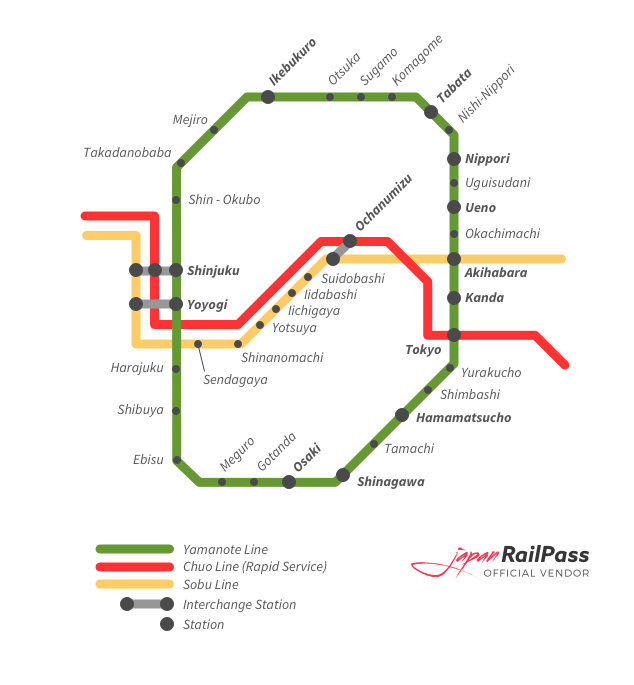
- Yamanote Loop Line, which provides easy access to many of Tokyo’s primary tourist attractions and other major train stations, including Tokyo-eki, Tokyo Station.
- Joban Line to Mito, Tsuchiura, Abiko, Matsudo and Sendai. The Joban Line also offers a Limited Express Hitachi/Tokiwa to Mito and Katsuta, and rapid train to Narita, Toride, Abiko, and Kita-Senju.
- Ueno-Tokyo line to Shinagawa, Yokohama, Odawara, and other parts of Tokyo.
Non-JR lines
Tokyo Metro‘s Ginza and Hibiya lines are accessible within Ueno Station.. Highway buses are also available at stops near the station’s Central and Park Exits.
For Narita Airport, many travelers use the Keisei Skyliner from Keisei-Ueno Station (a short walk from JR Ueno). It’s important to note that Keisei-Ueno is a separate station from JR Ueno, so allow extra time if you’re connecting to this service.
For Haneda Airport, you can connect via central Tokyo stations (such as Shinagawa) using JR lines and onward airport connections.
How to get to Ueno Station
As it’s located on the Yamanote Line, Ueno Station can be easily accessed from many of Tokyo’s other major train stations, including Tokyo, Shinagawa, Shinjuku, and Ikebukuro stations. Ueno Station is within walking distance of many local attractions.
Ueno Station contains two primary levels, as well as an underground station serving the Shinkansen lines. The station is quite large, so it’s best to check exit signs before you leave the ticket gates so you can head directly to your destination.
If you are visiting Ueno Park, museums, or the zoo, use the Park Exit for the most direct walk. If you want to head toward shopping streets and local restaurants, use the Central Exit, which leads toward Ameyoko and the streets around Okachimachi.
If you’re carrying luggage, coin lockers for storage are conveniently located near the escalators and at each exit.
Ueno Station map and layout
Things to do around Ueno
The area around Ueno includes interesting shops and restaurants, such as an Irish pub (The World End) just a few steps from the station. You’ll also find a branch of the famous Hard Rock Café in the area.
A market street kwon as Ameyoko, or “candy store alley” is located between Ueno and Okachimachi stations. It gained its nickname after the end of World War II, when it became the place to go for sweets and inexpensive treats. Today, most stalls offer street food or discount clothing.
Nearby to Ueno Station are also a number of famous cultural sites. Originally part of the grounds of the Kaneiji Temple, Ueno Park is a western style park that has been a public fixture since 1873.
With more than 1,000 trees, the park is a prime location for viewing cherry blossoms. Other highlights include the statue of Saigo Takamori, commemorating the battle from which the park emerged, and the former temple’s Shinobazu Pond.
Ueno Park is also home to several museums and other educational institutions. These include the Tokyo National Museum, the National Museum of Western Art, the National Science Museum, Shitamachi Museum, and the Tokyo Metropolitan Art Museum. Japan’s first zoological garden, the Ueno Zoo, is also located there.
Whatever attractions you discover in the Ueno district, your time in Tokyo is certain to make your vacation one to remember.