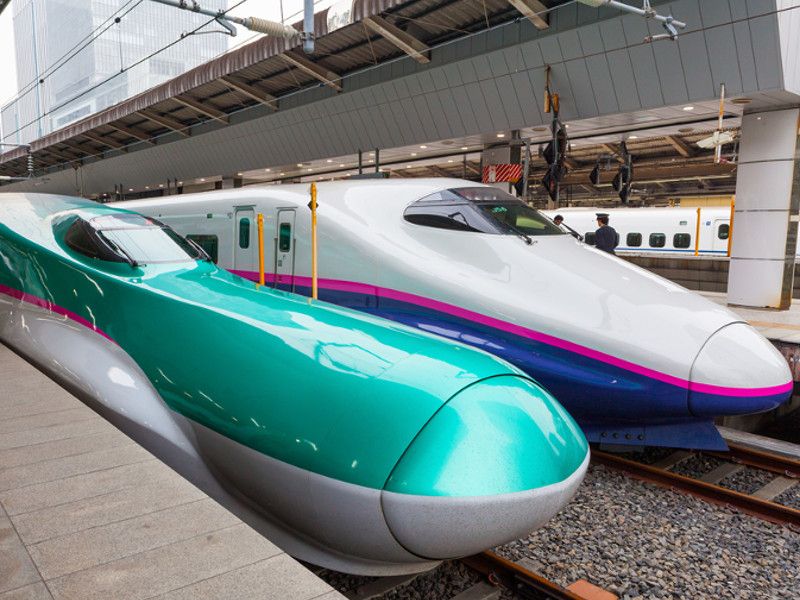
If you’re planning to travel between Tokyo, Kyoto, Osaka, and Kanazawa, you have the option of both the JR Pass and the Hokuriku Arch Pass.
Both passes offer unlimited travel, but their coverage, flexibility, and ideal routes are very different.

If you’re planning to travel between Tokyo, Kyoto, Osaka, and Kanazawa, you have the option of both the JR Pass and the Hokuriku Arch Pass.
Both passes offer unlimited travel, but their coverage, flexibility, and ideal routes are very different.
Choosing between the Japan Rail Pass and IC cards like Suica, Pasmo, or ICOCA can impact your travel budget and convenience.
Here we break down the differences so you can pick the best option for your itinerary.
The manga comic ‘Watashi ga Mita Mirai’ (or ‘The Future I Saw’ in English) has captured public attention with its prophecy that a major natural disaster will hit Japan on July 5th 2025.
JR regional passes are designed for travelers who want to explore certain areas of Japan, and don’t need the nationwide JR Pass.
JR East offers several different passes that can reach cities like Sapporo, Kanazawa, and Niigata while enjoying unlimited train rides within a fixed period.
Planning a trip through Western Japan? Whether you want to stay close to Osaka, Kobe, and Kyoto, or you’re planning on venturing as far as Hiroshima or the Japanese Alps, there’s a JR West Regional Pass to suit your trip.
Planning a trip to Japan and wondering whether the JR Pass is worth it? The answer depends on your itinerary and what kind of experience you’re looking for.
In this post, we’ll compare individual train tickets and the Japan Rail Pass, including differences in cost, comfort, and convenience. You’ll find all the details you need to help you select the right ticket for your trip.