
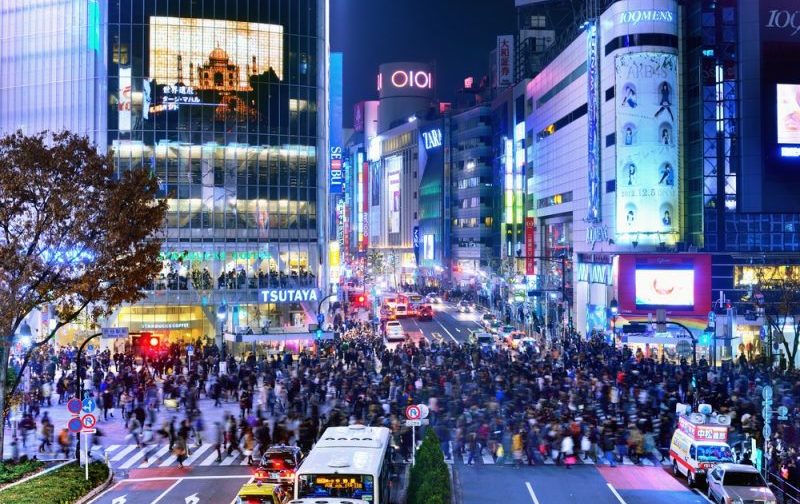
Shibuya is one of Tokyo’s 23 wards, famous for the shopping and entertainment district centered around Shibuya Station. Many of Japan’s fashion trends are born on the streets of Shibuya.
Shibuya is also a station with a long history. Shibuya Station opened in 1885 as a stop along what is now called the Yamanote Line. It was also the afternoon rendezvous of the famous dog Hachiko, now immortalized in bronze statues, film, and print.
Many of the trains served by Shibuya Station belong to the Japan Railways group and can be accessed using your JR Pass. As well as convenience for reaching other parts of Tokyo, the world famous Shibuya Crossing and Hachiko Statue bring travelers to the station.
Remember that at the JR Travel Service Center, you will be able to activate your Japan Rail Pass and make your seat reservations.
Table of Contents
Shibuya Station JR lines
No Shinkansen lines serve Shibuya Station directly. However, you may take the Yamanote Line to Tokyo Station for connections to the Tohoku, Yamagata, Akita, Joetsu, Hokuriku, and Hokkaido Shinkansens.
JR lines which serve Shibuya include:
- Saikyo Line to Kawagoe, Omiya, Osaki, Shin-Kiba, and Shinjuku
- Shōnan-Shinjuku Line: northbound to Akabane, Urawa, Omiya, Kumagaya, Utsunomiya, Takasaki, Maebashi and southbound to Ebisu, Osaki, Kawasaki, Yokohama, and Ofuna
- Yamanote Line, a loop line connecting many stations and Tokyo attractions. Other stations on the route include Tokyo, Shinagawa, Shinjuku, and Ikebukuro stations
- Narita Express provides direct access to Narita Airport
If you need to travel to Haneda Airport, simply take the Yamanote Line to Hamamatsucho Station. From there, take the Tokyo Monorail to Haneda Airport using your JR Pass.
Non-JR lines
Other train services using Shibuya Station include:
- Keio Inokashira Line to Shimo-Kitazawa, Meidaimae, Eifukucho, and Kichijoji
- Tokyu Den-en-toshi Line to Chuo-Rinkan, Nagatsuta, and Futako-Tamagawa
- he Tokyu Toyoko Line to Jiyugaoka, Yokohama, and Motomachi-Chukagai
- Tokyo Metro’s Ginza Line to Ueno, Asakusa, Ginza, and Akasaka-mitsuke
- Tokyo Metro’s Hanzomon Line to Oshiage, Otemchi, Tobu-Dobutsu-Koen, Kuki, and Minami-Kurihashi
- Tokyo Metro’s Fukutoshin Line to Shinjuku-Sancho, Ikebukuro, Wakoshi, Kawagoe-shi, and Hanno
How to get to Shibuya Station
Shibuya Station can be accessed directly from any of the main stations on the Yamanote Line. The main portion of the station has multiple exits and gates across several levels.
The station is part of a long-term redevelopment project, and construction is ongoing. Platforms, passages, and exits may change, so make sure to allow extra time for transfers and follow station signage carefully.
If you’re carrying luggage, coin operated storage lockers near the west exit, the Hachiko Exit, and the Keio Line.
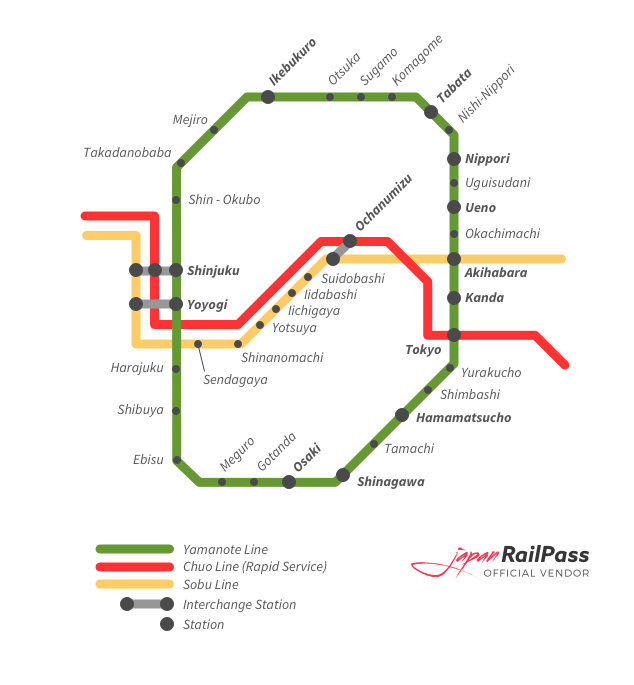
Shibuya Station map

Things to do in Shibuya
Shibuya is one of Tokyo’s most vibrant and energetic districts, world-famous for its bustling streets, cutting-edge fashion, and iconic landmarks. Whether you are looking to shop the latest trends, dine at amazing restaurants, or simply soak in the electric atmosphere, this dynamic neighborhood has plenty of unforgettable experiences to offer.
Visit the Hachiko Statue
Exiting the station on the western side through the Hachiko Exit, you will find a bronze statue of an Akita dog on a stone platform. The dog is Hachiko, a Japanese symbol of loyalty and Japan’s most famous dog.
Born in 1923, Hachiko awaited his master each day outside Shibuya Station. For 9 years after his master’s death, Hachiko continued his daily vigil at the station at the time his owner’s train had arrived.
Experience the Shibuya Scramble Crossing
The intersection in front of the Hachiko Exit is in itself a landmark. Known as the Shibuya Scramble Crossing, it’s filled with neon signs, giant video screens, and a sea of pedestrians, and is often described as a miniature of New York City’s Times Square. It’s a favorite photo op for tourists, and can be seen in many films.
Overlooking the crossing and connected to the station is Shibuya Scramble Square, one of the district’s newest landmarks. This modern complex integrates shops, dining options, and office space directly into the station area.
Discover Shibuya Mark City
Shibuya Mark City, a large commercial complex, is also popular with travelers as it’s connected directly to the station. It contains popular shops and restaurants, as well as the Shibuya Excel Hotel Tokyu, which overlooks the famous scramble crossing.
Shop at Center Gai and Department Stores
Over a dozen major department stores featuring a wide range of styles crowd the streets around Shibuya Station. The pedestrian Center Gai is popular with young people, and is a hive of popular fashion.
Stroll Down Supeinzaka and Koen Dori
Also nearby is Supeinzaka, or “Spain Street,” a café and boutique lined walkway leading to the Parco department store. Koen Dori, meaning “Park Street,” is another shopping street that accesses Yoyogi Park.