
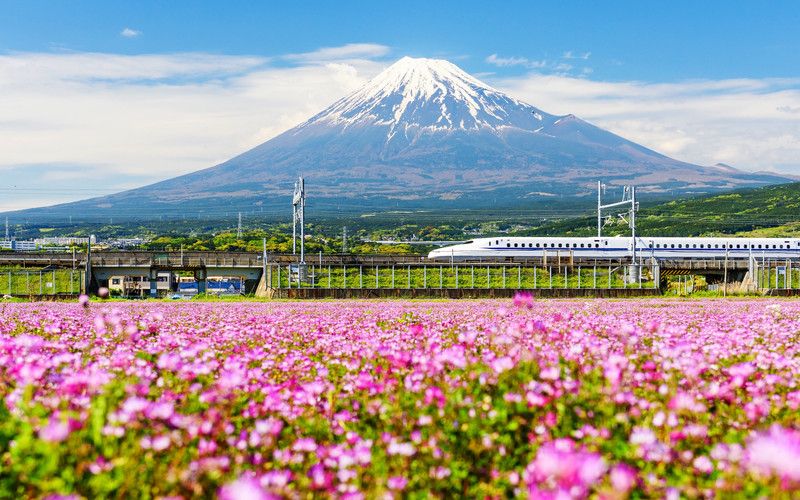
Mount Fuji, Japan’s iconic peak, is a must-visit destination for travelers in Tokyo. Just a short trip from the capital, this UNESCO World Heritage site offers breathtaking views and countless activities.
A day trip from Tokyo to Mt Fuji and the Fuji Five Lakes and Hakone areas is among the favorite experiences of many travelers to Japan.
And getting from Tokyo to Mount Fuji is simple and convenient with JR Pass train routes as well as buses, car rentals, and a private transfer from Tokyo available.
On this page, we cover the best ways to get to Mt Fuji from Tokyo, including trains, buses, private transfers, and car rentals, helping you plan the perfect journey.
Table of Contents
Tokyo to Mt. Fuji by train
One of the most popular and fastest ways to travel from Tokyo to Mount Fuji is by train.
Japan’s efficient and reliable rail network offers several options, each catering to different budgets and schedules.
Taking the Shinkansen bullet train
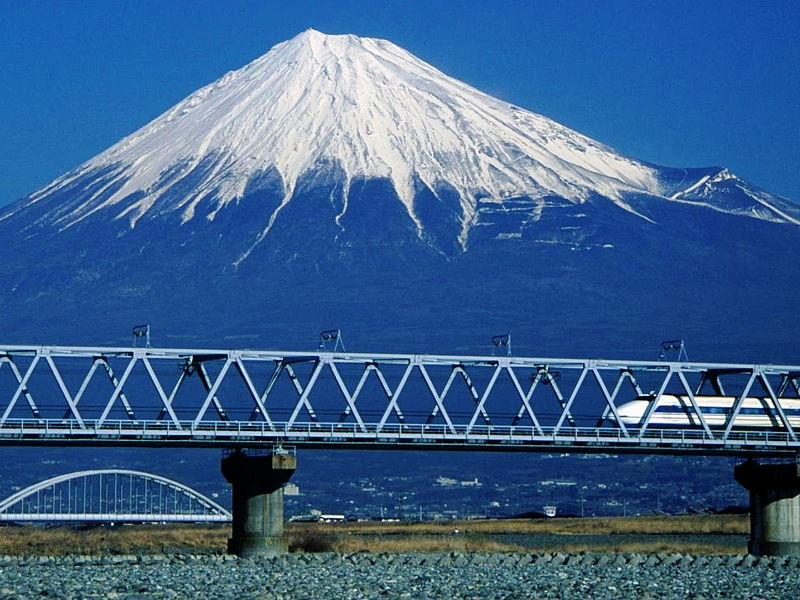
To take a bullet train from Tokyo to Mt. Fuji, use the Tokaido Shinkansen line from Tokyo Station or Shinagawa Station to Shin-Fuji Station.
This option also provides you with stunning views of Mount Fuji around 40-45 minutes into the journey. For the best views, take the right-hand window seat F (or D in Green Cars).
Kodama trains stop at all stations and are suitable for this route. Japan Rail Pass holders can use covered Kodama services at no extra cost.
Trains depart frequently, approximately every 15-30 minutes. It’s approximately 6,000 yen for a one-way ticket without a JR Pass.
It’s worth noting that JR Pass coverage on the Tokaido Shinkansen depends on the pass type and service used, so the nationwide Japan Rail Pass is your best option in this case. Plus, it’s valid for other trips around the country and is great value for money.
To complete the trip to Mount Fuji from Shin-Fuji station, transfer to a local bus operated by Fujikyu to reach Mount Fuji station. A one-way bus journey takes about 2h 15 minutes and costs around 2,136 yen.
Please note that Fujikyu is not part of the Japan Rail Group, which means the Japan Rail Pass does not cover buses run by this company, and no seat reservations are available.
Fuji Excursion Limited Express
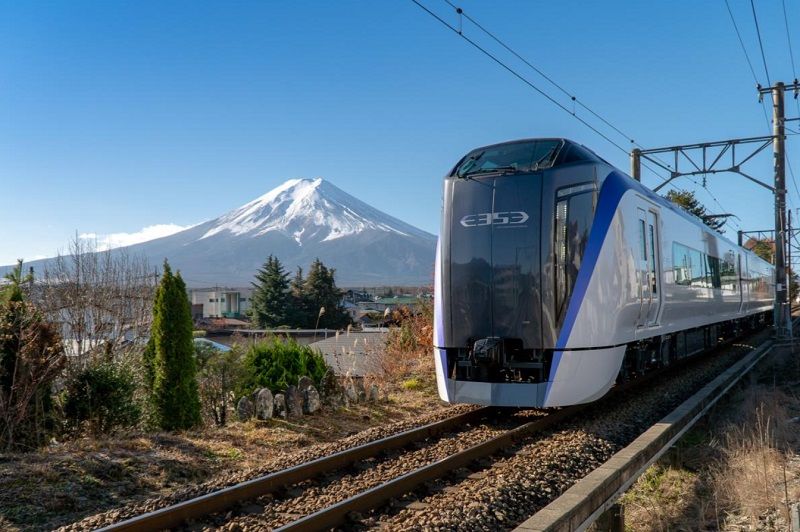
This direct train connects Shinjuku Station in Tokyo to Kawaguchiko Station, a gateway to Mount Fuji.
Fuji Excursion trains operate directly between Shinjuku and Kawaguchiko, making them one of the most convenient ways to reach the Mount Fuji area. The journey takes approximately 2 hours and does not require a transfer at Otsuki.
These trains operate with 4 daily departures. Departure times and frequencies vary by season and timetable revision, so check the latest Fuji Excursion schedule from Tokyo before traveling.
The price is approximately 4,200 yen one way without a JR Pass. JR Pass holders can use the JR portion of the route and only need to pay the additional fare for the Fujikyu Railway section between Otsuki and Kawaguchiko.
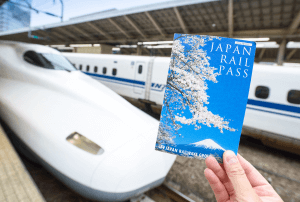
Unlimited access to transportation across Japan for 7, 14, or 21 days on:
- All Shinkansen trains
- Rapid and Local JR trains
- JR bus and ferry services
- Airport Transfers
A single ticket, huge savings.
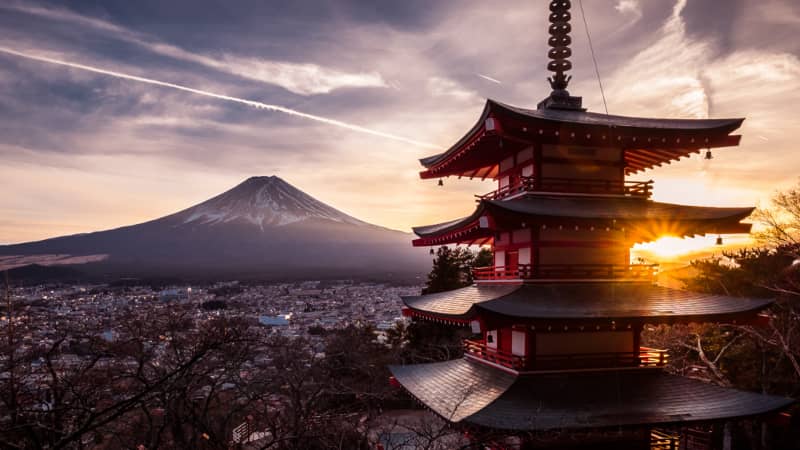
Kawaguchiko Station offers easy access to nearby attractions, including Chureito Pagoda and Mount Fuji Station. Direct buses operated by Fujikyu are available. The bus fare is typically around 220-300 yen, and the journey takes approximately 10-15 minutes.
Check out our guide to the Fuji Excursion Limited Express for more information.
Riding a bus
Buses are a budget-friendly and straightforward option to reach Mount Fuji from Tokyo. Multiple operators provide direct services to key locations near the mountain.
Highway buses depart from major stations such as Shinjuku, Tokyo, and Shibuya, arriving at Kawaguchiko Station or Fuji-Q Highland.
The journey takes approximately 2 hours, depending on the departure point and traffic. One-way fares are typically around 2,200 yen, with some online bookings available from 2,000 yen.
Fujikyu and Keio Bus operate frequent direct services from Shinjuku, with roughly two buses per hour throughout much of the day.
Some operators also offer premium express services with fewer stops, enhanced seating, and additional onboard amenities. For example, Fujikyu Bus and Keio Bus run direct express routes equipped with reclining seats, free Wi-Fi, and dedicated power outlets. For even more comfort, companies like Willer Express offer luxury coaches featuring spacious three-row independent seating and privacy canopies, while premium tour operators like Hato Bus utilize double-decker coaches with panoramic windows for the ultimate view of the mountain.
If you’re planning on climbing Mt. Fuji, direct buses to the Fuji Subaru Line 5th Station operate during the official climbing season, generally from early July until around 10 September. Direct services from Tokyo typically cost around 3,800 yen one way.
Travelers looking for a more comfortable door-to-door alternative can also book a private transfer from Tokyo.
Additionally, some bus companies offer guided tours, including transport and itinerary packages.
Renting a car
For maximum flexibility, renting a car is an excellent choice for traveling to Mount Fuji. This option is particularly convenient for groups or families, and rental locations are available throughout Tokyo, including major train stations and airports.
Most foreign visitors need a valid International Driving Permits (IDP) issued under the 1949 Geneva Convention, although some nationalities can drive using an approved Japanese translation of their licence.
During the winter months, snow tires or chains may be required depending on weather conditions and your route.
Check out our guide to renting a car in Japan for more information.
How far is Mount Fuji from Tokyo by car
The driving distance from Tokyo to Mount Fuji is approximately 100-120 km, taking 2-3 hours depending on traffic and the route.
The Chuo Expressway offers direct access to the Mount Fuji area, and parking is available at major tourist spots around the mountain. However, private vehicle access to the Fuji Subaru Line 5th Station is restricted during much of the climbing season, when drivers usually need to park at the base and continue by shuttle bus or taxi.
What to see in the Mount Fuji area
As we have already mentioned, Mount Fuji forms part of the Fuji-Hakone-Izu National Park. Hakone is one of the most popular destinations for tourists, located less than 100 km from Tokyo.

Famous for its scenic beauty, Lake Ashi, hot springs and breathtaking views of Mount Fuji, Hakone is more than worth the visit.
Please check our new Hakone guide for more information on visiting the area.