
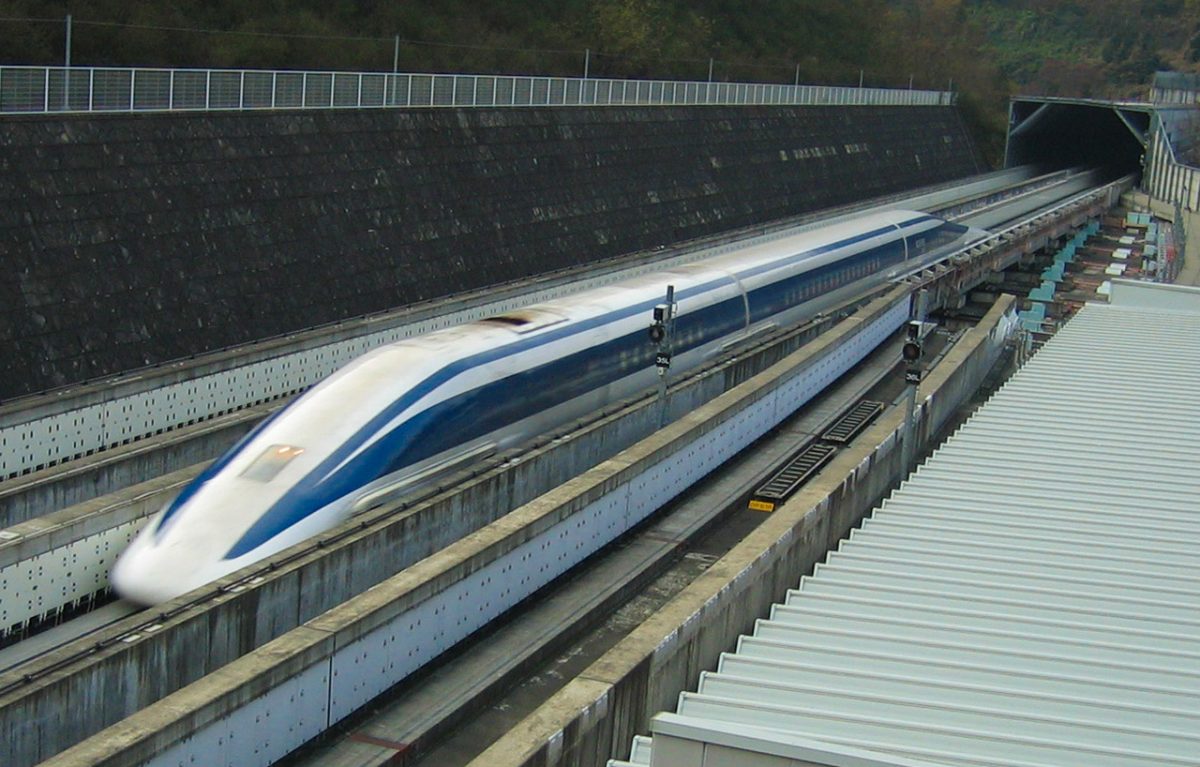
Imagine rushing across the Japanese countryside at astonishing speeds. The wheels of your vehicle do not even touch the ground. In fact, you’re floating!
This experience is planned to become a reality through Japan’s SCMaglev trains. The technology set a world rail speed record of 603 kilometres per hour and is being developed for use on the Chuo Shinkansen.
Japan is already well known for its extensive Shinkansen train system, which has been in operation since 1964. The future Japan maglev train is designed to operate at up to 500 kilometres per hour, although a confirmed opening date for passenger services has not yet been announced.
Table of Contents
Maglev train technology: How it works
SC Maglev, or superconducting magnetic trains, were developed by the Central Japan Railway Company and the Railway Technical Research Institute beginning in the 1970s. Maglev trains work on the principle of magnetic forces between the cars and the track.
The word maglev is actually a combination of the words “magnetic” and “levitation.” The magnetic levitation, or floating of the train, is achieved through the use of an electrodynamic suspension system, or EDS.
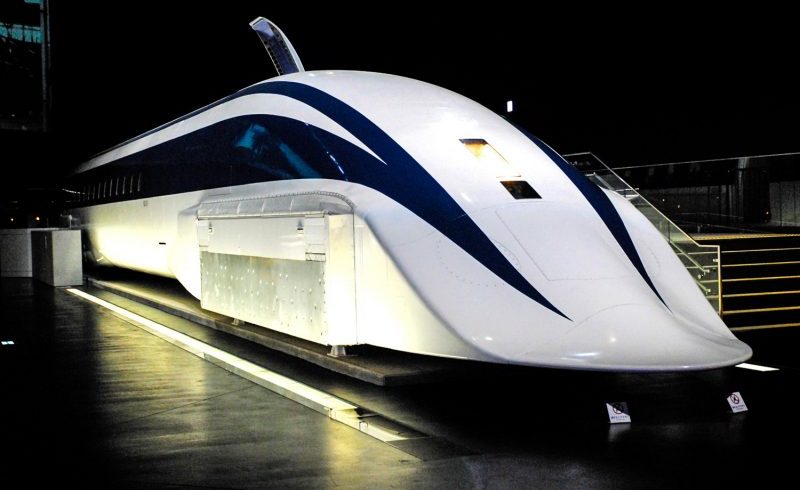
The rails, or guideways, contain two sets of cross-connected metal coils wound into a “figure eight” pattern to form electromagnets. On the train itself are superconducting electromagnets, called bogies. When stopped, the train rests on rubber wheels.
To begin motion, the train moves forward slowly on these wheels, allowing the magnets beneath the train to interact with those of the guideway. Once the train reaches 150 kilometers per hour (93 miles per hour), the magnetic force is strong enough to lift the train 100 millimeters (4 inches) off the ground, eliminating friction to allow for increasingly high speeds.
The same magnetic forces that lift the train also move it forward and keep it centered within the guideway. This is the same technology used by Tesla’s Hyperloop, which makes the ride smooth and the train exceptionally safe.
Japanese Maglev: Fastest train in the world
In April 2015, a manned superconducting Maglev train broke two previous land speed records for rail vehicles. The train was clocked at 603 kilometers per hour or 375 miles per hour.
The Chuo Shinkansen will not operate at this record-breaking test speed. Passenger services are planned to run at around 500 kilometres per hour (311 miles per hour), making the Japan maglev train faster than today’s conventional high-speed rail services.
The table below compares some of the fastest trains in the world by their maximum operating or planned service speed.
| Rank | Train Name | Country | Max operational speed | Type |
|---|---|---|---|---|
| 1 | JR SCMaglev L0 Series (planned) | Japan | 500 km/h (311 mph) | Superconducting Maglev |
| 2 | Shanghai Maglev | China | 460 km/h (286 mph) | Maglev |
| 3 | CR Harmony (CRH380A/D) | China | 350 km/h (217 mph) | Conventional high-speed rail |
| 4 | CR Fuxing (CR400AF/BF) | China | 350 km/h (217 mph) | Conventional high-speed rail |
| 5 | DB ICE 3 (Class 403/406) | Germany | 330 km/h (205 mph) | Conventional high-speed rail |
| 6 | SNCF TGV | France | 320 km/h (199 mph) | Conventional high-speed rail |
Maglev train vs. Shinkansen
Japan’s future Chuo Shinkansen maglev line is designed to operate considerably faster than the existing Tokaido Shinkansen.
The Tokaido Shinkansen currently connects Tokyo and Shin-Osaka in as little as 2 hours and 21 minutes, travelling at a maximum operating speed of 285 kilometres per hour.
The SCMaglev is planned to operate at up to 500 kilometres per hour. Once the full route reaches Osaka, the journey from Shinagawa to Shin-Osaka is expected to take approximately 67 minutes.
The table below compares the current Tokaido Shinkansen with the planned Chuo Shinkansen service.
| Feature | Chuo Shinkansen (Maglev) | Tokaido Shinkansen |
|---|---|---|
| Route | Shinagawa–Nagoya–Shin-Osaka | Tokyo – Nagoya – Shin-Osaka |
| Max speed | 500 km/h (311 mph), planned | 285 km/h (177 mph) |
| Travel time (Tokyo–Osaka) | ~67 minutes | From 2 hours 21 minutes |
| Main technology | Superconducting magnetic levitation (SCMaglev) | Conventional high-speed rail |
Did you know? Since beginning operations in 1964, the Tokaido Shinkansen has recorded no passenger fatalities or injuries caused by train accidents.
Unlimited access to transportation across Japan for 7, 14, or 21 days on:
- All Shinkansen trains
- Rapid and Local JR trains
- JR bus and ferry services
- Airport Transfers
A single ticket, huge savings.
Chuo Shinkansen: future Maglev train line
Construction of the Chuo Shinkansen between Shinagawa and Nagoya began after the project received approval in 2014. The section was originally expected to open in 2027, but that date can no longer be achieved. JR Central has not announced a new opening date because excavation has not yet begun in the Shizuoka section of the Southern Alps Tunnel.
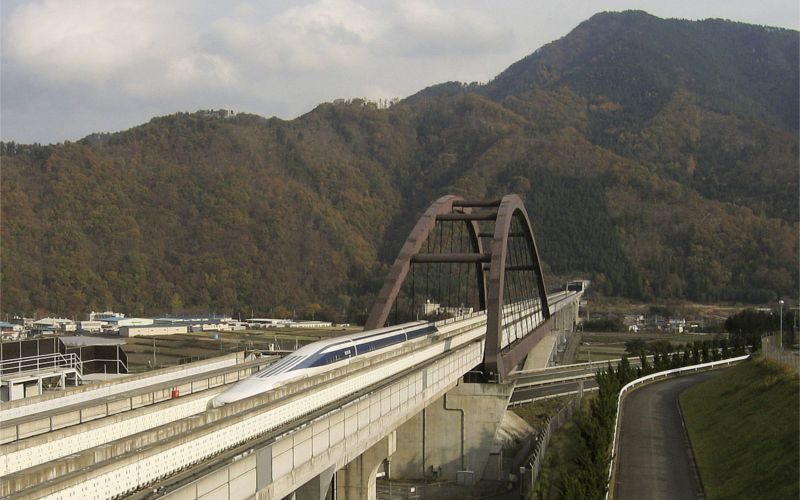
Using superconducting Maglev technology, the journey is expected to take around 40 minutes. This compares with approximately 86 minutes on the current Tokaido Shinkansen line, which is available with the Japan Rail Pass.
The planned route includes Shinagawa and Nagoya stations, with intermediate stations provisionally identified in Kanagawa, Yamanashi, Nagano and Gifu prefectures. Shinagawa, rather than Tokyo Station, is planned to serve as the Tokyo-area terminus of the Chuo Shinkansen.
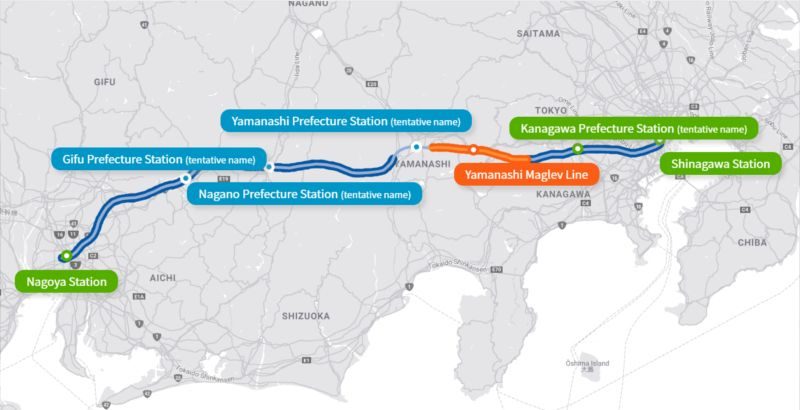
The original goal of the Maglev project was to cover the route from Tokyo to Osaka in around one hour. Once the line is extended from Nagoya to Shin-Osaka, the fastest Shinagawa–Shin-Osaka journey is expected to take approximately 67 minutes, although no confirmed opening date has been announced.
Construction is under way along the approved Shinagawa–Nagoya route. The route covers approximately 285.6 kilometres, around 86% of which will run underground through urban and mountainous areas. In October 2025, JR Central increased the estimated construction cost for the Shinagawa–Nagoya section to ¥11 trillion.
Chuo Shinkansen ticket prices have not yet been confirmed. For financial modelling, JR Central has provisionally assumed a Shinagawa–Nagoya fare ¥700 higher than the equivalent reserved-seat Nozomi fare, but final prices will be set closer to the opening date.
When completed, the train is expected to include 16 carriages capable of carrying around 1,000 passengers. Visitors can learn more at the SCMaglev and Railway Park in Nagoya or the Yamanashi Prefectural Maglev Exhibition Center, where test runs may also be visible.