
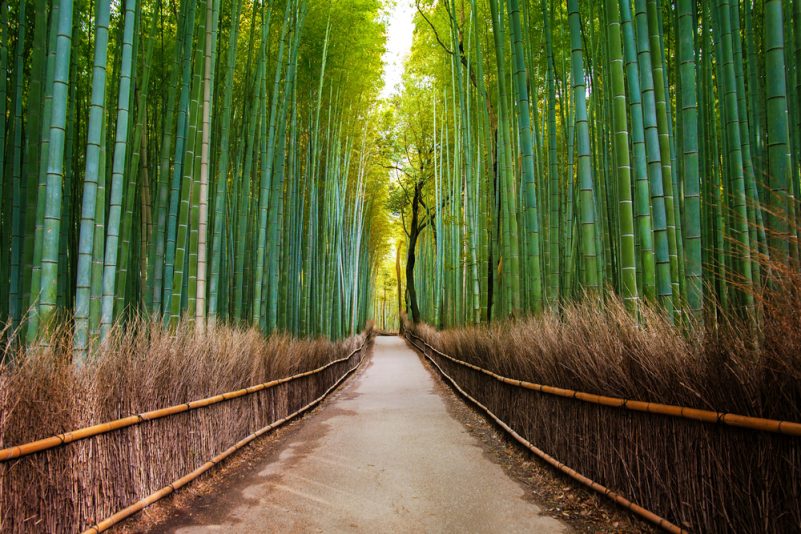
Located at the foot of the “Storm Mountains” in the northwest of the city of Kyoto, this world-famous, seemingly endless forest of swaying bamboo boughs is perfect for a relaxing retreat to nature during a stay in Japan.
The Arashiyama bamboo grove is open 24/7 and admission is free. The surrounding Arashiyama district, known for unique fishing methods which involve using trained cormorant birds, is also well worth a visit.
Its main street and Togetsu-kyo Bridge have been called a “tourist circus,” but beyond this thoroughfare, Arashiyama offers an authentic and unforgettable Japanese experience. Read on to discover how the bamboo forest is just the beginning.
This sightseeing district makes for an incredible day trip from Kyoto. From lush forests to cherry blossoms to vibrant autumn koyo colors, Arashiyama is a visual delight.
Table of Contents
Arashiyama Bamboo Forest
Arashiyama’s Sagano Bamboo Forest, or Bamboo Grove, is both locally famous and world-renowned. Visitors can stroll paths lined with endless rows of towering bamboo. The experience has been described as other-worldly, serene, and dreamlike.
The sound of the rustling bamboo within this forest has been named one of the “100 Soundscapes of Japan” by the Japanese Ministry of Environment. Together with Fushimi Inari and the Kinkaku-ji, it offers a Kyoto experience not to be missed.
The bamboo grove is open 24 hours a day and boasts no entrance fee, so during peak season, it is recommended that you visit before 9 am or in the evening.
How to get to Arashiyama Bamboo Forest From Kyoto Station
The best way to get to Arashiyama Bamboo Forest from Kyoto Station is to take the JR Sagano Line (San-in Main Line), included in your JR Pass, to Saga-Arashiyama Station. The journey takes about 11 minutes by rapid service or 17 minutes by local train.
Local train stops include:
- Umekoji-Kyotonishi Station
- Tambaguchi Station
- Nijo Station (near Nijo Castle)
- Emmachi Station (connection to the 102 bus to Kinkaku-ji)
- Hanazono Station
- Uzumasa Station
From the JR Saga-Arashiyama Station, you can take a bus, which departs approximately every 7 minutes. Alternatively, you can walk about 15 minutes to the Arashiyama Bamboo Grove. Keep in mind that trains departing from the Hankyu Arashiyama Station are not covered by the JR Pass.
Next to the station is the red-brick building of Saga Torokko Station, from where you can take the Sagano Scenic Railway. This romantic train passes a gorge offering a lovely view along the Hozu River.
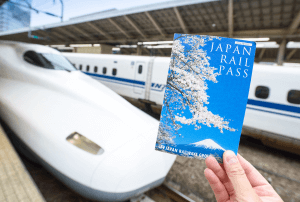
The JR Pass gives you unlimited access to transportation all around Japan for 7, 14, or 21 days, including Shinkansen.
A single ticket, huge savings.
Arashiyama is an immersive experience that offers something for everyone – from outdoor adventures to somber temples to relaxing getaways. Below are a few of our favorite attractions that Arashiyama has to offer.
Iwatayama Monkey Park
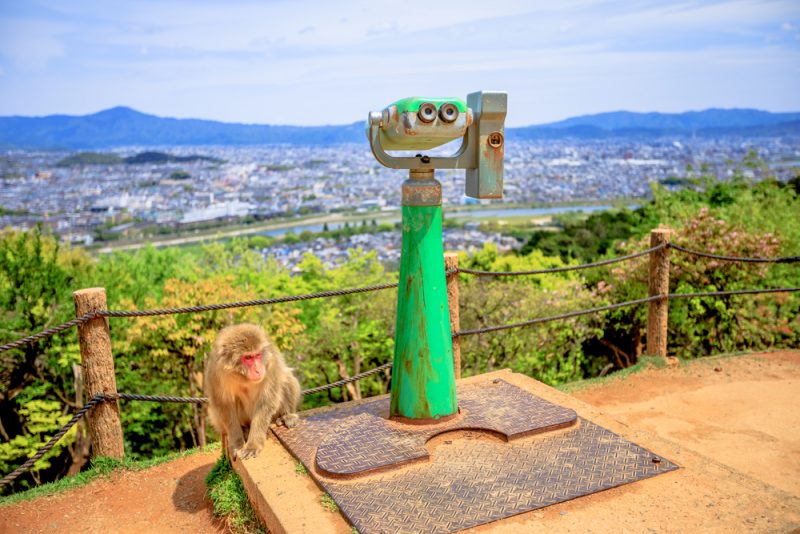
Japan travel guides often feature images of Japanese macaques, a large species of monkey, lounging in winter hot springs. At the Iwatayama Monkey Park (also known as Arashiyama Monkey Park), you can view these animals up close and personal. You can even feed them peanuts and fruit in a designated area.
Cross the Tsutenkyo Bridge, another famous landmark, to reach the Iwatayama Monkey Park. From the ticket booth, you will hike for about 20 minutes along a winding path of both natural materials and concrete stairs to reach the lair of the monkeys.
Admission is ¥800 for adults aged 16 and over and ¥400 for children aged 4 to 15; children aged 3 and under enter free. Entry hours are 9 am to 4 pm, with the summit open until 4:30 pm. The park is closed on January 1 and may also close on irregular dates, in bad weather, or earlier if the monkeys return to the mountain.
Kameyama-kōen Park
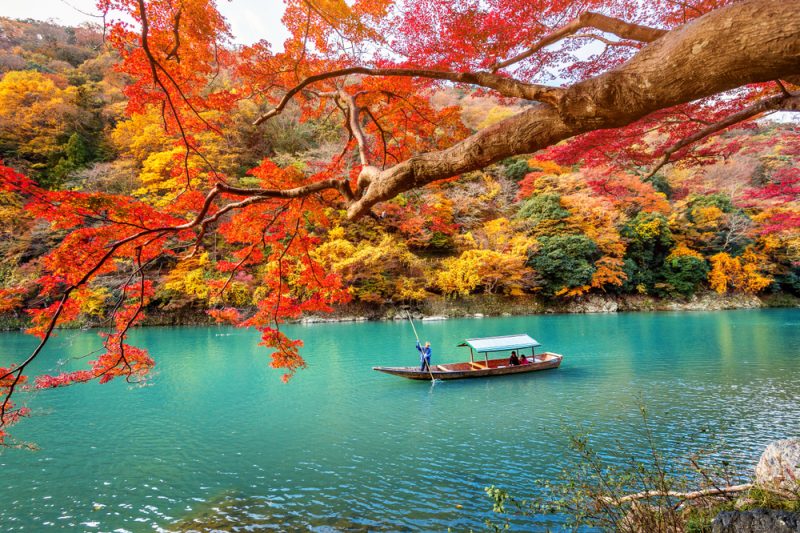
At the end of the bamboo forest, you can get away from the crowds and reach the magnificent views of Kameyama-koen.
This hilltop park, next to the river, it’s particularly attractive during the cherry-blossom and autumn foliage seasons. Look out for monkeys, which sometimes descend from the hills to pick fruit.
Arashiyama Ryokans
Staying in a ryokan – a traditional Japanese inn – is a sublime way of getting in touch with authentic Japanese culture. Hanaikada, next to Togetsukyo Bridge, offers an authentic experience.
Its onsen baths use 100% Arashiyama Onsen water. A private rooftop open-air bath is also available for ¥2,200 per group for 40 minutes, with a reservation required.
Arashiyama Temples
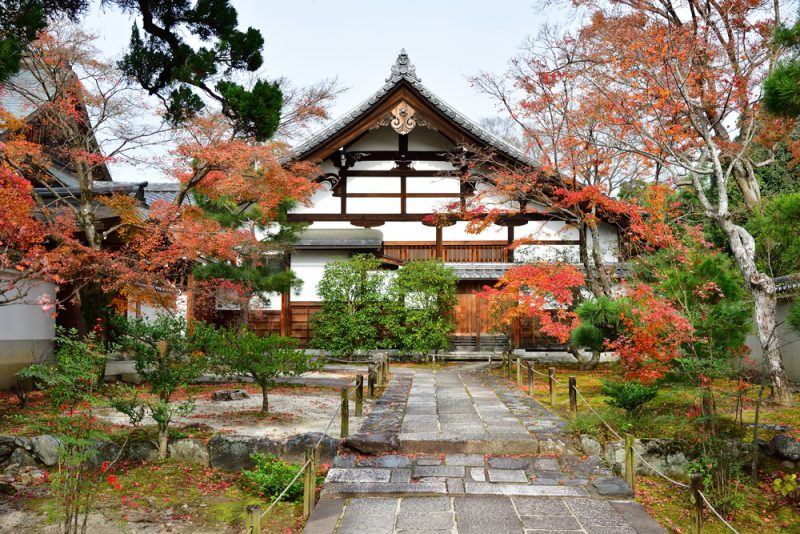
Tenryu-ji Temple is a 5-minute walk from Randen Arashiyama Station and about a 13-minute walk from JR Saga-Arashiyama Station. This World Heritage Site has a garden entrance fee of ¥500 for high school students and older, ¥300 for elementary and middle school students, and free admission for preschool children.
Admission to the temple buildings costs an additional ¥300. Tenryu-ji is open from 8:30 am to 5 pm, with last admission at 4:50 pm, and offers spectacular autumn colors. The Zen temple grounds house the entrance to the bamboo grove, a symbol of strength thought to ward off evil.
Other temples in the area include the Tendai sect Buddhist Nison-in Temple, the Jojako-ji Temple, the thatch-roofed Gio-ji Temple, and the many-statued Adashino-Nembutsu-ji Temple.
Finally, you can also visit the Okochi Sanso Villa, home of the late silent movie actor Denjiro Okochi. The villa and gardens cover almost 20.000 square meters, including spectacular gardens and magnificent views of Kyoto city and the Hozu river.
A trip to Arashiyama is like taking an excursion to another world – a simpler, more peaceful time. If you’re ready to relax and recharge, book your JR Pass and start planning your next Japan vacation today.